You have a trip booked, a sore knee or a cranky back, and a feed full of people swearing by a injectable called the "Wolverine" peptide. This guide covers what has actually been reported about BPC-157, why the road is a poor place to experiment with it, and how to plan a trip that works with your body instead.
What's being reported about BPC-157
Per Healthline, BPC-157 is a synthetic peptide nicknamed the "Wolverine" peptide because of its claimed rapid-healing properties. Interest is climbing among people chasing pain relief and faster injury recovery. Healthline reports that a new study found a 33-fold increase in documented users between 2020 and 2026.
The evidence hasn't kept pace. Healthline describes human evidence for both safety and effectiveness as limited. Experts quoted in that coverage advise against unapproved peptides until the potential for adverse reactions is better understood.
The regulatory picture adds confusion. Per Healthline, the FDA held a July 2024 advisory vote on allowing pharmacy compounding of BPC-157, and restrictions on compounded peptides have reportedly eased. Healthline also notes that high-profile figures, including RFK Jr., have promoted peptides. Our read: an easing of rules can sound like a stamp of approval, but it isn't the same thing as strong human evidence that something works or is safe.
Why it tempts travelers in particular
This part is our analysis, not reporting. A trip is a deadline. You've paid for flights, a hotel, maybe a guided hike, and a nagging injury threatens all of it. A "fast recovery" promise is appealing when the calendar is the problem.
That's exactly when to be most skeptical. Time pressure is how people talk themselves into shortcuts.
Why the road is the worst place to experiment
Again, this is our reasoning rather than a reported finding, but it follows from what's known: there's little human data on adverse reactions, so nobody can tell you what a bad reaction looks like.
- You'd be far from your own doctor. If something goes wrong, you may be in a place where you don't speak the language or know the health system.
- Your itinerary leaves no room for a setback. A reaction in the middle of a multi-city trip costs more than a sore shoulder ever would.
- Sourcing is a gamble. Buying a product online or from a stranger overseas, and carrying it across borders, adds uncertainty about what you're actually getting and what rules apply. If you ever carry any prescribed medication abroad, check the rules for your destination and airline first.
If you're still curious about BPC-157, have that conversation with a licensed clinician at home, well before departure, not at a hostel or hotel the night before a hike.
What to do instead: plan the trip around the injury
These are general planning habits, not medical advice. Your own clinician should guide anything specific to your condition.
Get a pre-trip check
Book a visit with your doctor or a physical therapist a few weeks before you leave. Ask what activity level is realistic, what to avoid, and which warning signs mean you should stop and get care. Ask for a short written summary of your condition and any medications to carry with you.
Build a slower itinerary
One anchor activity per day is plenty. Put your most demanding day (a long hike, a walking-heavy city day) next to a deliberately light one. Treat rest days as part of the plan, not as failure.
Choose logistics that spare your body
- Book accommodation with an elevator or ground-floor room if stairs hurt.
- Pick central locations so you walk less between sights.
- Reserve transfers for heavy luggage days instead of hauling bags on foot.
- Pack light. A smaller bag is a pain-management tool.
Keep your routine alive on the road
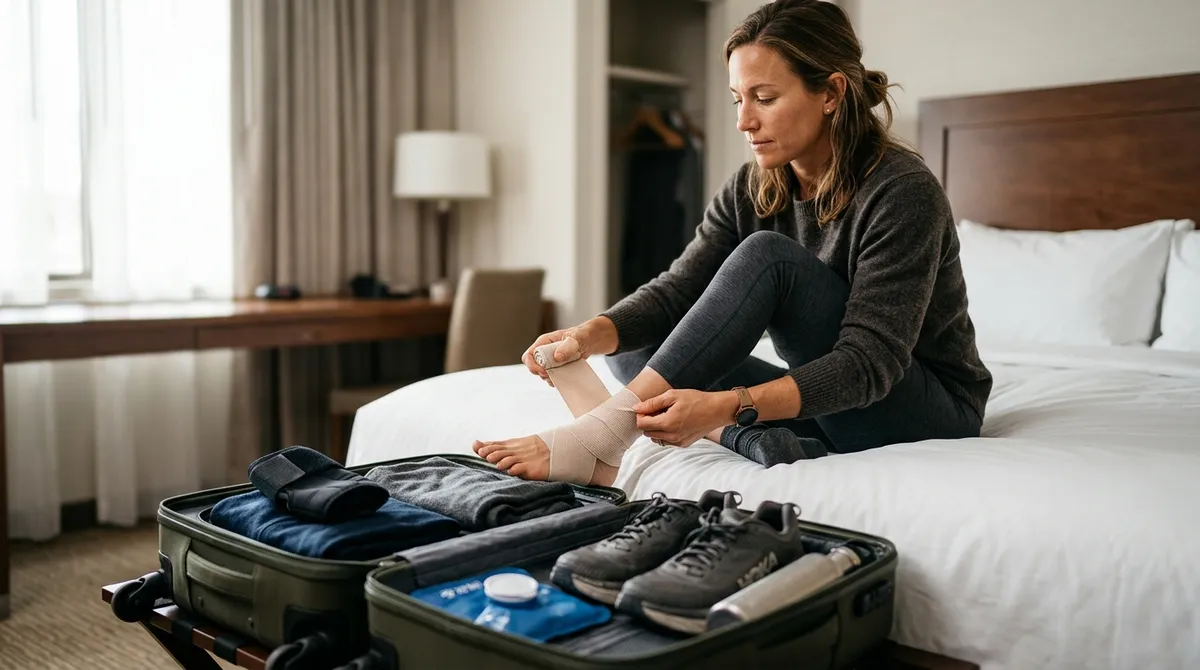
If a physical therapist gave you exercises, schedule them like a tour booking. Ten minutes in a hotel room each morning is more useful than skipping them because you're on vacation. Break up long flights and drives with regular chances to stand and move.
Check your safety net
Before you go, read your travel insurance for medical coverage and for any exclusions tied to existing conditions. Note the location of the nearest clinic or hospital at each stop, and keep your insurer's contact number somewhere you can reach it offline.
Build flexibility into bookings
Favor refundable or changeable reservations for the physical parts of your trip. If your body says no on day three, you can swap a trek for a food market, a museum, or a long café afternoon without losing money.
The trade-off worth making
A trip shaped around your limits is still a good trip. Slower mornings, shorter routes, and one fewer stop often make the memories better, not worse. A speculative injection with thin human evidence, taken far from home, is a bet where the downside lands in the middle of your vacation.
Before you pack, talk to a clinician about your injury, then rebuild your itinerary around what your body can do right now. The mountain, the old town, and the coastal path will all still be there next season.