Lima has a legitimate claim to being one of the great food cities on the planet — not just in South America, but globally. Chefs pilgrimage here. Restaurants from this city consistently land on world best-of lists. And yet, arriving as a traveler with no local knowledge and a few days on the clock, you can easily spend that time eating fine but missing the point entirely.
A guided food tour fixes that problem. The question isn't really whether to do one — it's which kind fits how you actually travel. By the end of this guide, you'll know exactly what to look for when comparing Lima food tours so you book the one that works for you, not just the one with the most reviews.
Start with Your Neighborhood Priority
Lima isn't a single city in feel — it's a collection of distinct districts that eat very differently from each other. Miraflores caters to the upscale, international-leaning crowd. Barranco is bohemian, younger, and home to creative kitchens. The Historic Centre and markets like Surquillo draw visitors who want to see where locals actually shop and eat day-to-day.
Before you compare tour listings, ask yourself: do you want to understand Lima's street-level food culture, or do you want a curated window into its celebrated restaurant scene? Your answer narrows the field immediately. Most food tours are built around one neighborhood or one culinary register — rarely both. Confirm the route and stops before you book.
Match the Tour Format to Your Appetite (Literally)
Food tours come in a few structural formats, and the difference matters more than people expect.
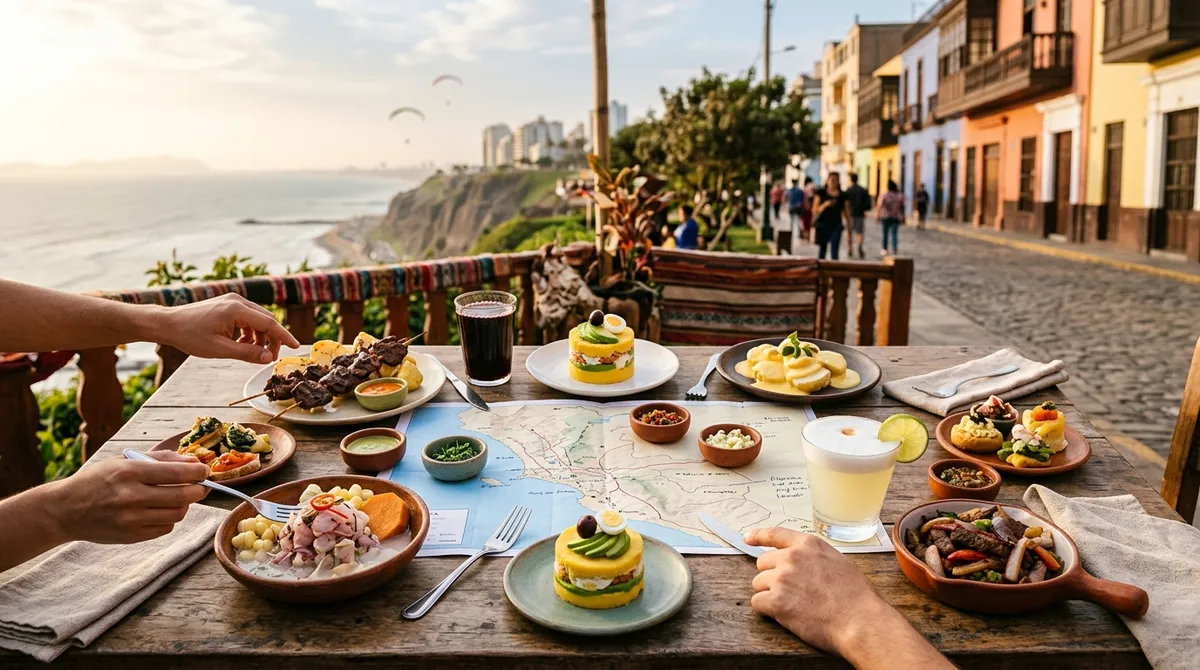
Tasting-focused tours move through multiple stops — often five to eight — with small portions at each. You get range: ceviche at one spot, anticuchos at another, a pisco sour somewhere in between. These work well if you want breadth and want to discover which dishes you'd return for on your own.
Meal-focused tours anchor around one or two fuller sits with context woven in around them. Better for slower travelers or anyone who finds the logistics of eight stops in three hours exhausting.
Market tours spend significant time inside Lima's produce and food markets — Mercado Surquillo is the classic option — giving you a ground-up view of Peruvian ingredients before you eat anything. These suit curious cooks and anyone who wants to understand why Peruvian food tastes the way it does.
Check the tour's stop count and timing. If a four-hour tour claims twelve stops, the math means you're barely pausing anywhere. Five to eight well-chosen stops across three to four hours tends to be the sweet spot for actually absorbing what you're tasting.
Consider Your Guide's Background, Not Just Their Ratings
Here's where food tours separate fast. A high star rating tells you the tour is reliably pleasant. It doesn't tell you whether the guide is a former chef, a culinary history obsessive, or someone who memorized a script.
For a destination as food-layered as Lima — where Peruvian cuisine draws on Indigenous, Spanish, Japanese, Chinese, and African culinary traditions simultaneously — having a guide who can actually explain why a dish exists matters. Look for tour descriptions that mention the guide's background specifically. Many of the best Lima food tours are run by locals with professional culinary training or years of deep neighborhood knowledge.
When you're reading reviews, filter for comments that mention what the guide explained, not just what you ate. Those reviews tell you whether the tour is educational or just a pleasant series of snacks.
Solo Traveler, Couple, or Group: Size Affects Everything
Private food tours cost more but give you a completely different experience — you eat at the guide's pace, you can linger somewhere that genuinely interests you, and the conversation goes where you take it. If food is a central reason you're visiting Lima, a private tour is often worth the premium.
Small-group tours (typically capped at eight to twelve people) balance cost and intimacy reasonably well. Large group tours — think twenty-plus — work better as general sightseeing experiences with food as a backdrop. They're harder to recommend if your goal is genuinely learning about Lima's culinary culture rather than checking a box.
If you're traveling with people who have strong dietary restrictions or preferences, confirm this with the operator before booking. Peruvian cuisine is seafood-heavy and frequently includes meat; some tours can accommodate alternatives, but not all.
Budget Honestly, Then Compare
Lima food tours span a wide price range. A budget-friendly group tour might run $30 to $50 per person; a private half-day experience with a culinary expert guide can run considerably higher. Neither price point is wrong — they're just different products.
The honest budget question is: what's the cost of eating badly or missing something essential because you didn't have local context? Lima is not a cheap destination to fly to. A few extra dollars on the right tour is cheap insurance against spending your limited time here eating forgettable meals.
Look at what's included: are drinks covered? Transport between stops? Entry fees for markets? A tour that looks cheaper can cost the same or more once you account for what it excludes.
One Practical Step Before You Book
Email or message the operator directly with one specific question about the tour — something about the stops, the guide, or how they handle a dietary need. The speed and quality of that response tells you almost everything about how well-organized the actual experience will be.
Lima's food scene rewards curiosity and preparation in equal measure. The right food tour doesn't just feed you well for a morning — it gives you a mental map of the city's culinary logic that makes every meal you eat afterward, on your own, make more sense. That's the real return on the booking.