Travel Weekly recently ran a culinary-focused guide to eating and drinking New Zealand's way, and it points to something useful for anyone planning a trip: the country works well as a food destination if you build the itinerary around what it does distinctively. This guide shows you how to do that, so you land with a plan rather than a list of restaurants.
A caveat up front. The Travel Weekly piece, as summarized for us, names broad strengths (distinctive producers, wine regions, seafood and Māori influences) rather than specific restaurants, prices or dishes. So this article gives you a planning framework, not a set of named addresses. Use it to decide where to point your research.
Start With the Four Things New Zealand Does Distinctively
Per Travel Weekly's framing, New Zealand's culinary appeal rests on four pillars:
- Distinctive local producers
- Wine regions
- Seafood
- Māori influences
Treat these as your filters. When you're choosing between two towns or two restaurants, ask which one lets you taste more of these four things. A meal that could be served in any city in the world is a weaker use of your limited trip days than one that is clearly rooted in place.
Treat Māori Food Traditions as Context, Not a Side Note
The Māori influence on Kiwi cuisine is one of the main reasons the country is being pitched as a culinary destination. The practical takeaway: don't treat it as a single tourist activity you tick off. Look for it in how menus, producers and experiences describe their ingredients and methods.
A few ways to act on that:
- When you book, look for experiences that are Māori-led or that explain Māori food traditions directly, rather than ones that only reference them in marketing.
- Ask questions at restaurants and tastings about where ingredients come from and how they're traditionally used.
- Spend time early in the trip on this, since it will give you context for everything else you eat.
I can't tell you specific dishes or methods from the source here, so rely on the hosts you book with to explain them. That's the point of choosing local guides.
Build Your Route Around Regions, Not Cities
The angle that translates best into an itinerary is regional. Travel Weekly's coverage points to wine regions, seafood and farm-to-table travel as the draws. Rather than picking restaurants first, pick the kind of place you want to eat in, then plan the drive.
A simple way to structure it:
Choose one wine region as an anchor
Wine is a headline attraction, so give it real time. A full day for tastings in one region beats a rushed stop in three. Book tastings ahead and decide who is driving before the first glass.
Pair it with a seafood stop
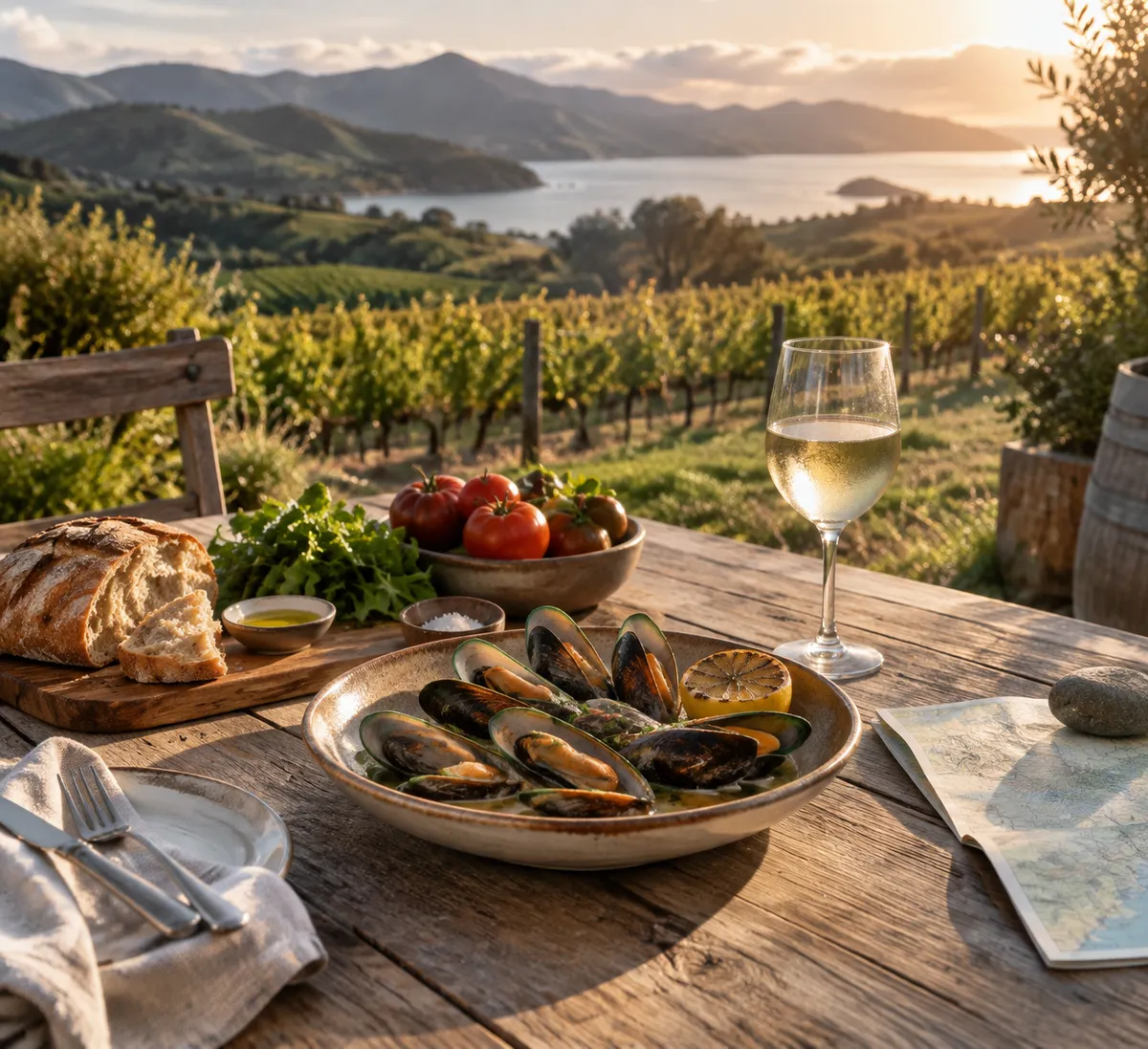
Seafood is the second pillar. Plan a coastal day where the meal is the main event, ideally somewhere you can eat close to where the food comes from.
Add a farm-to-table stay
Producers are the third. Look for a farm, orchard or small producer that offers a visit, tasting or meal. This is where the "authentic, place-based" experience travelers say they want tends to happen.
Sketch a Culinary Road Trip
Travel Weekly's angle menu includes a culinary road trip across the country. Without inventing route details the source doesn't give, here's a template you can fill in with your own research:
- Days 1-2: Arrive and orient. Choose a base, and seek out a Māori-led food experience to frame the trip.
- Days 3-5: Wine region. Book two tastings, one long lunch and one evening free for a producer-led dinner.
- Days 6-7: Coast. Make seafood the plan, not an afterthought.
- Days 8-9: Farm or producer stay. Slow down and eat what's local to the area.
Adjust the length to suit you. The principle is one theme per leg, with driving time kept short enough that you're eating, not commuting.
Eat Like a Local: Practical Habits
- Ask what's local. At any restaurant, cafe or cellar door, ask what comes from nearby. It tends to produce better meals than ordering by familiarity.
- Book the anchor experiences early. Tastings, producer visits and Māori-led experiences are the things most worth reserving ahead.
- Leave gaps. The best finds on food trips are often unplanned: a market, a roadside stop, a recommendation from your host.
- Check current details. Opening hours, seasonal availability and entry requirements change, so confirm them before you go rather than relying on any guide, including this one.
Why Now Is a Good Time to Plan This
Travel Weekly notes that food-led travel continues to shape how people plan trips, as travelers seek more authentic, place-based experiences. That fits New Zealand well: the pillars above are things you can only really get by being there.
Your Next Step
Pick one wine region, one coastal stop and one Māori-led or producer experience, then draw your route between them. Those three anchors are your trip. Everything else is a bonus.