An American Airlines flight from St. Louis to Philadelphia made an emergency landing at St. Louis airport on Oct. 17 after passengers reported a strange odor, per Fox News. Oxygen masks dropped during the flight. Passengers described a jolt and a drop, along with concerns about the plane's mechanical condition, and some recounted real fear in the cabin.
I can't tell you what caused it. The report as summarized here doesn't establish a cause, and speculating would not help you. What it does give us is a useful prompt: if something frightening happens on a flight you're on, what should you do, and how do you tell a scary sensation from a real danger? Here's a practical way to think about it.
What happened, as reported
Per Fox News, passengers noticed a strange odor and had concerns about mechanical issues. They also described a jolt and a drop, and oxygen masks deployed. The plane then made an emergency landing back at St. Louis airport. The report centers on how frightening the experience felt for passengers, and it also includes expert context: delays and emergency procedures do not automatically mean a flight is unsafe.
That last point is the one worth sitting with. An emergency landing is a safety procedure being used. It is the system responding to a problem, not necessarily the system failing.
If you smell something odd, say something
A strange odor in the cabin is the kind of thing you should never sit on quietly. You don't need to diagnose it. Your job is simply to report it.
- Press the call button or flag the nearest flight attendant.
- Describe it plainly: what it smells like, and roughly where you are seated.
- Don't assume someone else has already mentioned it.
Crew members are trained to assess these reports and decide what happens next. Giving them an early, clear note makes their job easier. In the St. Louis case, passengers reportedly raised the odor, and the flight ended with a return to the airport.
If the oxygen masks drop, follow the routine
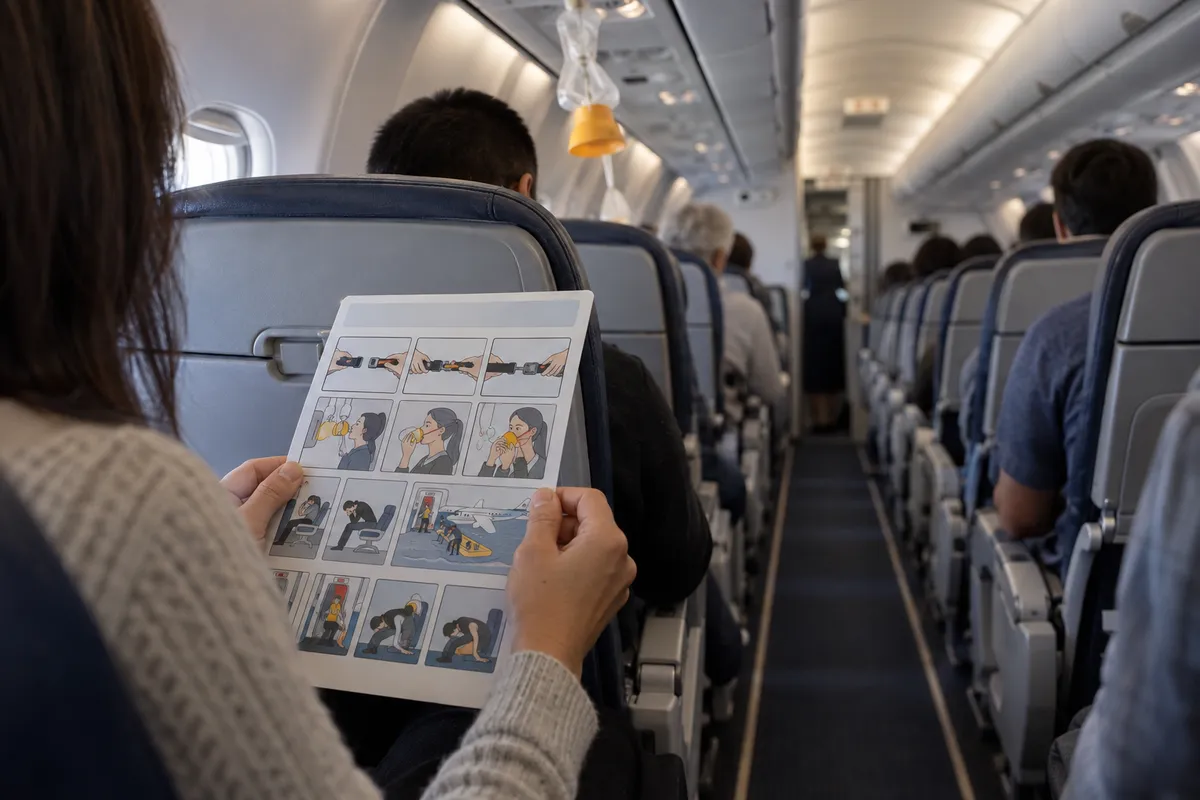
Seeing masks deploy is frightening, and that is normal. The practical response is the same one in the safety briefing you've probably tuned out many times:
- Pull the mask toward you and put it on your own face first.
- Breathe normally.
- Listen for crew and pilot instructions.
- Help others, including children, only after your own mask is on.
The point of rehearsing this mentally is simple: when your heart is racing, a short checklist beats improvisation. Take the briefing seriously next time, especially the part about where the exits are and how the mask works.
Separate the sensation from the risk
A jolt or a drop feels dramatic from a seat. Passengers on this flight reported both, and one headline quoted fear of dying. Those feelings are understandable. But how a moment feels is not a reliable measure of how dangerous it is, and the expert context in the Fox News report makes the same broad point: disruptions and emergency procedures do not automatically signal an unsafe flight.
When you notice your mind racing, try this:
- Watch the crew. Calm, purposeful flight attendants are useful information.
- Listen for the announcement. Pilots typically explain what's happening and what comes next.
- Slow your breathing. Breathe in for four counts, out for six. It steadies you and keeps you ready to follow instructions.
- Stay seated and belted. Unless told otherwise, this is almost always the right default.
What an emergency landing means for your trip
A diversion or return to the departure airport isn't just a scare. It's also a logistics problem. If it happens to you, a little preparation helps.
Before you fly
- Keep your boarding pass and booking reference accessible on your phone.
- Pack medications, chargers and essentials in your carry-on, not your checked bag.
- Save your airline's app and customer service number so you can rebook quickly.
After you land
- Check the airline app first for rebooking options, since lines at the desk form fast.
- Ask staff about meals, hotels and rebooking, and keep your receipts.
- Write down what you experienced while it's fresh, in case you need to describe it later.
These steps won't make the flight less frightening. They make the aftermath less chaotic.
Why you shouldn't avoid flying over one story
Incidents like this get intense attention, in part because passengers can now share frightening moments in real time. That visibility can make dramatic events feel more common than they are. I'd caution against drawing sweeping conclusions from a single report, particularly one whose cause hasn't been laid out. The more useful takeaway is that the system has procedures for exactly these moments, and passengers who know the basics are better positioned to cope.
Build a nervous-flyer kit
If scary moments loom large for you, a little prep can lower your baseline anxiety:
- Know your safety card. Read it every flight, even if you've flown a hundred times.
- Choose seats thoughtfully. An aisle seat near an exit gives some people a greater sense of control.
- Bring a distraction. Downloaded shows, a podcast or a book give your mind somewhere else to go.
- Practice the breathing routine on the ground so it's automatic in the air.
The takeaway
You can't control what happens at 30,000 feet, but you can control what you do: speak up early about anything odd, put your own mask on first, follow the crew, and keep your post-landing plan ready. Spend two minutes on the safety briefing on your next flight. It's the cheapest travel insurance you'll ever get.