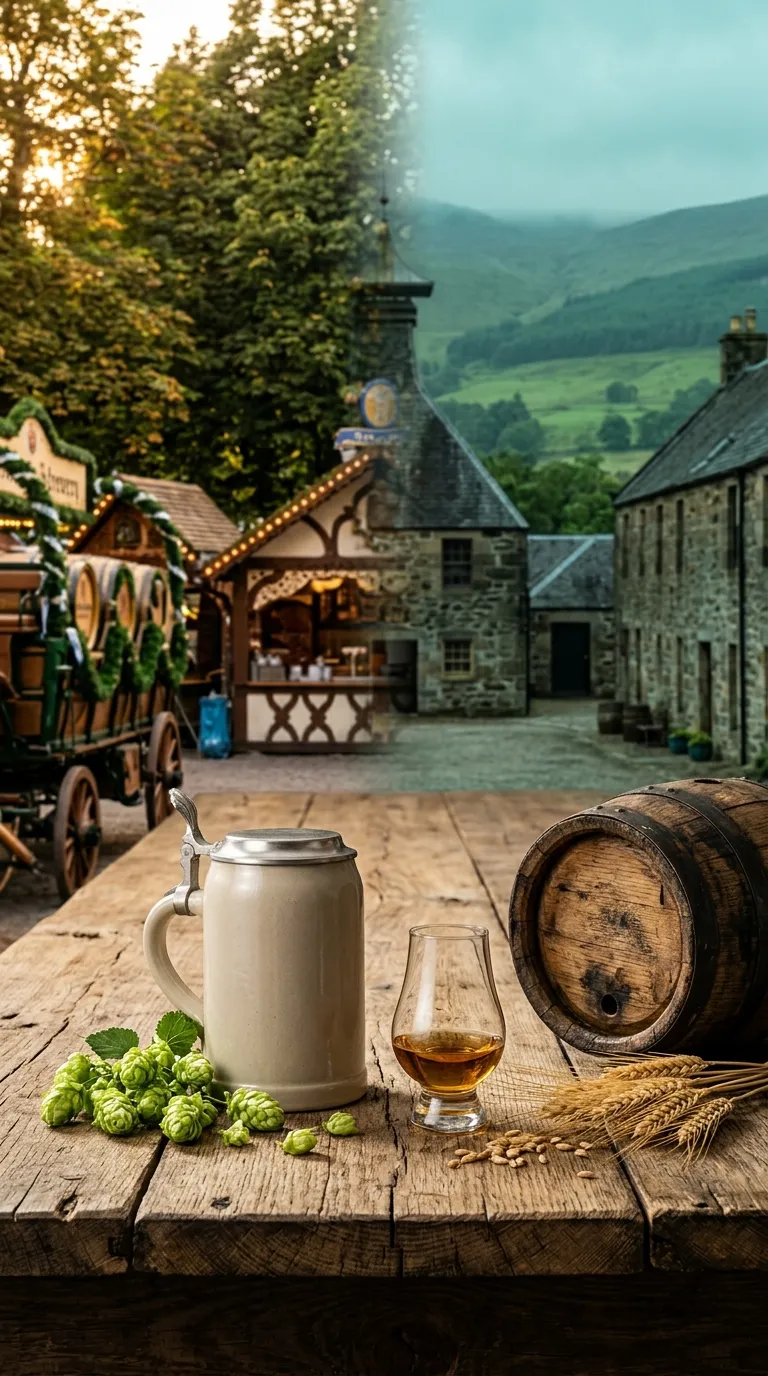
You can buy a German lager or a Scotch whisky at home in about ten minutes. So why do travelers keep flying to Munich and Scotland to drink them? Because a trip built around the source gives you something the bottle or glass alone can't. This guide shows you how to plan one: how to choose a place, what to look for once you're there, and how to make the experience count.
The idea comes from a recent Forbes piece on what it calls the Oktoberfest effect. Per Forbes, travelers are increasingly prioritizing food and drink tied to a specific place, from Oktoberfest in Munich to whisky tourism in Scotland. Its core argument is that provenance (where something is made, who makes it, and the culture around it) adds value, authenticity, and emotional pull.
Here's how to put that into practice.
Start With One Product, Not One Country
Most trip planning starts with a destination. A source-driven trip flips that: pick the food or drink you already care about, then follow it home.
- If you love whisky, Scotland is the obvious pull, and Forbes points to whisky tourism there as a leading example.
- If beer is your thing, Munich's Oktoberfest is the benchmark for a drink that became a full travel event.
Starting with a product keeps your itinerary focused. Instead of a scattered list of sights, you get a clear thread to follow, and every stop either deepens it or doesn't earn a place.
Look for the Three Parts of Provenance
Forbes frames provenance as more than a location stamp. Use its three parts as a checklist when you evaluate a stop:
- Where it's made. Can you see, smell, or stand in the place of production?
- Who makes it. Will you meet or hear from the people behind it?
- The culture around it. Is there a tradition, ritual, or setting that explains why it matters locally?
A stop that covers all three is worth building a day around. A stop that covers only the first, say a tasting room with no connection to the people or traditions behind the product, is a weaker use of your limited time.
Treat Oktoberfest as the Blueprint
Forbes presents Oktoberfest as the model for experience-led tourism. Whatever your view of the crowds, the lesson for planners is useful: the drink is only part of the draw. The setting and the shared tradition are what make people travel for it.
When you scout your own source-driven trip, ask what the Oktoberfest equivalent is. It might be a seasonal event, a local ritual, or a place where the product is part of everyday life. The more a destination has built culture around the thing you want to taste, the more your trip will feel like an experience rather than a purchase.
One practical note: if your plan centers on a major event, check dates and book accommodation well ahead through official sources. Big, tradition-heavy events tend to fill up, though I can't give you specific numbers from the Forbes piece.
Build a Simple Day Around the Source
A workable template for a single day:
- Morning: Visit the place of production or a local market connected to your product.
- Midday: Eat a meal where the product is part of the local table, not a tourist add-on.
- Afternoon: Do a guided tasting or tour where you can ask who makes it and why it's made that way.
- Evening: Drink or dine somewhere that reflects local custom, and ask the staff what locals order.
Two anchored experiences per day beat five rushed ones. Provenance is about depth, so leave room to linger and ask questions.
Ask Better Questions at Every Stop
You get more from a source visit when you talk to the people there. A few prompts that open up the story:
- What makes this different from the same product made elsewhere?
- How did this become part of the local culture?
- What would you recommend drinking or eating it with?
These questions point straight at the who and the culture, the parts of provenance you can't get from a label.
Know Why Origin Stories Cost More (and When It's Worth It)
Forbes notes that brands, regions, and creators are leaning into origin stories to stand out in crowded food, drink, and travel markets. For you as a traveler, that cuts two ways. Origin stories make products feel more premium, and that can show up in prices. But a good story isn't the same as a good experience.
Before you pay for a tour or tasting, check that it delivers something concrete:
- Does it take you to the actual place of production?
- Will you hear from the people who make the product?
- Does it explain local tradition, or just repeat marketing language?
If the answer to all three is yes, the premium is likely buying you the real thing.
Keep Costs Reasonable
Source-driven travel doesn't need to be extravagant. A few habits help:
- Choose one headline experience per trip (a distillery tour, a festival day) and keep the rest of your food spending local and simple.
- Eat where residents eat. Everyday meals tied to the same region often show provenance just as well as a paid tasting.
- Skip duplicate experiences. Two similar tours rarely teach you twice as much.
The One Thing to Do Next
Pick the single food or drink you'd happily talk about for an hour, then search for the place it comes from. Write down the three parts of provenance (place, people, culture) and plan your first stop around whichever one you can't get at home.